Why the family group chat explodes when Mum has a fall — and what to do about it
By Tony Burrett · 2 June 2026
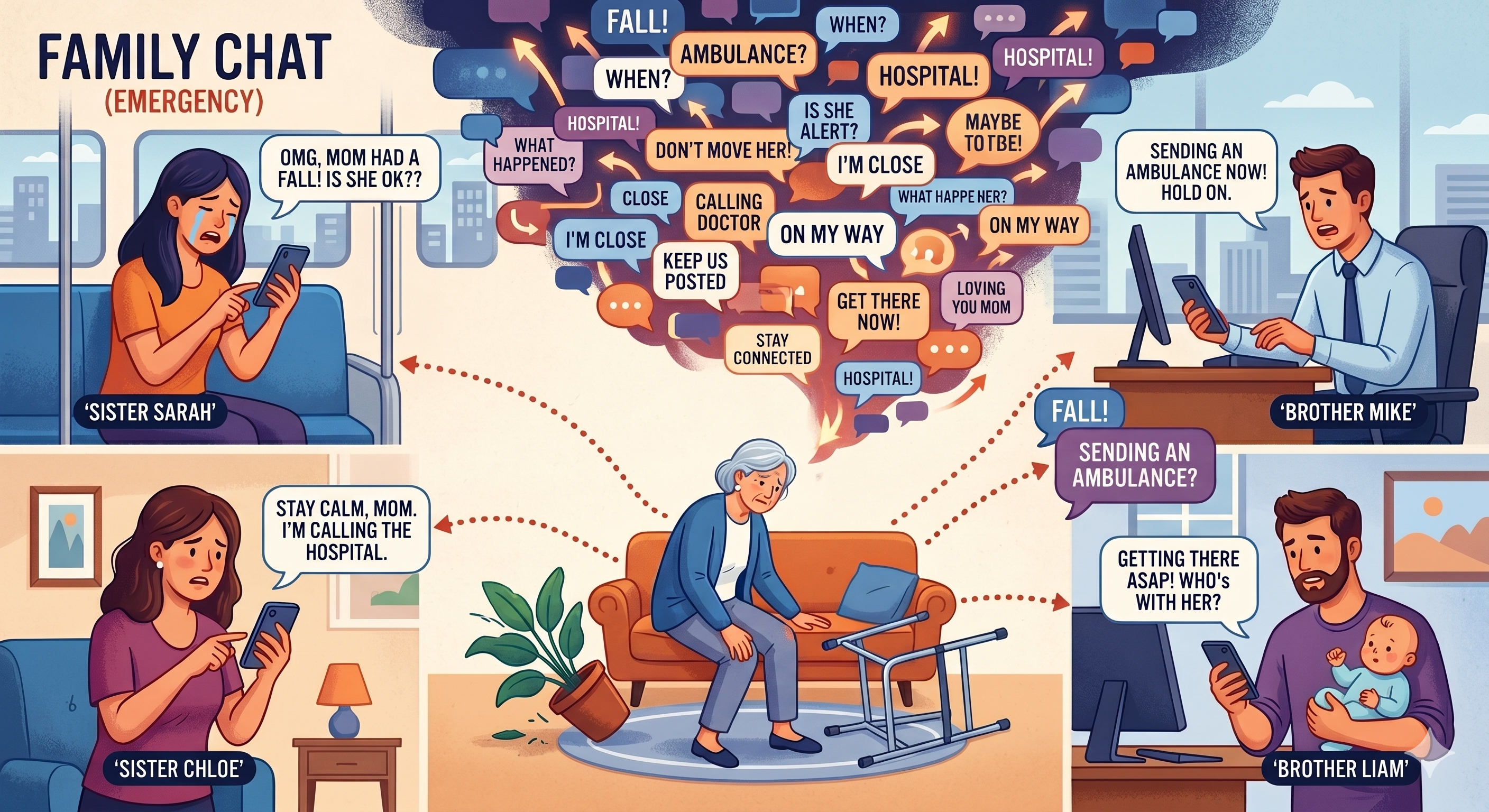
If you've been managing a parent's care for months or years, you'll recognise this scenario instantly.
You're across the appointments, the medications, the GP's concerns. Then something happens — a fall, a hospitalisation, a worrying phone call — and suddenly the siblings who've been largely absent are flooding the group chat with opinions, suggestions and questions you've answered a dozen times already.
The team behind Vera, a free Australian AI tool that helps families navigate eldercare, have written about this dynamic in a way that really stuck with us. Their observation is that crisis doesn't bring out people's best selves — it brings out their oldest selves. When the pressure is on, adult siblings tend to fall back into the roles they played as kids decades ago. The one who always fixed things. The one who felt overlooked. The one who was protected from anything difficult. These aren't conscious choices — they're automatic.
It's a sharp insight, and if it resonates, Vera is worth fifteen minutes of your time. The app listens to your caregiving situation in a conversation and builds you a personalised care guide.
But after you've got your plan, you might be wondering: how do you actually bring the rest of the family along with you?
The real problem isn't conflict. It's information gaps.
Most family caregiving conflict isn't really about different values or who loves Mum more. It's about different levels of information.
The sibling who lives nearby has been watching the slow decline — the fridge with forgotten food, the repeated stories, the bills piling up. The sibling in Perth or Singapore has visited twice this year, seen Mum looking well, and left reassured. They're not working from the same picture.
When a crisis hits, those two different pictures collide. And the person who's been doing the work ends up having to justify every decision to people who don't have the background to evaluate it.
This is where CarePoster helps, not just in a crisis, but long before one arrives.
Keeping everyone in the loop, before things go wrong
CarePoster gives families a shared space to record what's actually happening with a parent's care — appointments, medications, observations, tasks, decisions. Not buried in a group chat. Not scattered across texts and emails. In one place, visible to everyone who needs to see it.
When something significant happens, family members who haven't been as involved can read back through the record and actually understand the context. The decline that's been happening over six months. The GP's concerns raised in March. The three falls before the one that sent Mum to hospital.
That context doesn't make hard decisions easy. But it means everyone is working from the same picture — which changes the conversation entirely.
And when conflict does arise
When decisions need to happen fast and emotions are running high, having a documented record of what's been observed, what professionals have said, and what's already been tried gives the hands-on carer something concrete to point to. It shifts the conversation from "trust me" to "here's what's been happening."
It also makes it easier to involve distant siblings meaningfully — not to re-litigate decisions already made, but to take on specific tasks, stay genuinely informed, and feel part of the process rather than excluded from it.
Image: Generated with Google Gemini Nano Banana