A practical guide to navigating My Aged Care for the first time
By Tony Burrett · 30 March 2026
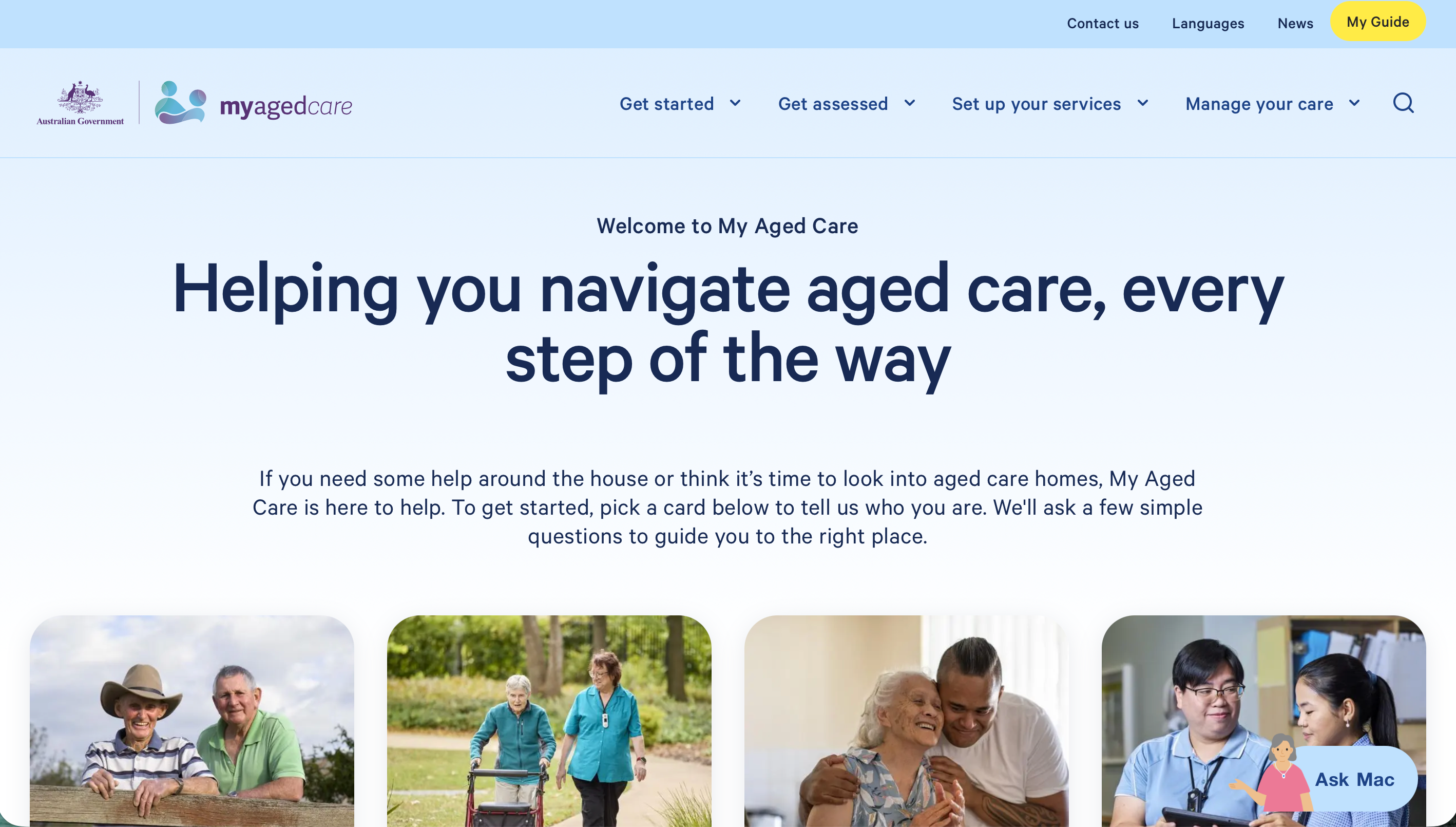
If someone in your family has recently been told they need more support at home, you've probably already encountered three words that prompt equal measures of relief and confusion: My Aged Care.
It's the Australian Government's entry point for accessing aged care services — and while it exists to help, the system can feel opaque and slow when you're already stressed and time-poor. This guide explains what it actually is, how it works, and what to expect.
What is My Aged Care?
My Aged Care is the federal government's centralised system for assessing, approving, and coordinating aged care services for Australians aged 65 and over (or 50 and over for Aboriginal and Torres Strait Islander people). It's the gateway to everything from in-home support to residential aged care.
You access it at myagedcare.gov.au or by calling 1800 200 422.
Step 1: Register
The first step is registering your loved one with My Aged Care — either online or by phone. You'll need their Medicare card. As a family member, you can register on their behalf if they give permission, or if you hold Power of Attorney.
At this point the system will ask some basic questions about what kind of help is needed. Be thorough — the more detail you provide, the more appropriate the assessment will be.
Step 2: The assessment
Once registered, an assessor will contact you to arrange a face-to-face visit. There are two types:
A Regional Assessment Service (RAS) assessment is for people who need entry-level support — things like help with cleaning, transport, or social activities.
An Aged Care Assessment Team (ACAT) assessment is for people who need a higher level of support, including Home Care Packages or residential care.
The assessor visits your loved one at home and asks questions about their daily life, health, and what they're finding difficult. It helps to have a family member present. Take notes.
Step 3: The approval
After the assessment, you'll receive a letter confirming what level of support your loved one has been approved for. Home Care Packages are divided into four levels, from Level 1 (basic care needs) to Level 4 (high care needs).
Here's where many families hit their first wall: approval doesn't mean immediate access. As of early 2025, around 96,700 people were waiting for their approved package level to be assigned. The wait can be months.
In the meantime, your loved one may be offered an interim package at a lower level.
Step 4: Choosing a provider
Once a package is assigned, you choose a home care provider to manage and deliver the services. This is where families often feel overwhelmed — there are hundreds of providers, quality varies, and the pricing structures are genuinely complex.
A few things worth knowing:
- Providers charge an administration or management fee, which comes out of the package budget. Ask what percentage this is upfront.
- You have the right to change providers if you're not happy.
- The new Support at Home program, which launched in late 2025, is gradually replacing the Home Care Packages system with a reformed model. If you're entering the system now, ask your provider how this transition affects you.
Step 5: Staying on top of it
Once services begin, the coordination work doesn't stop — it just changes shape. You'll need to track what services are being delivered, review monthly statements, communicate changes in your loved one's needs, and liaise between the provider, the GP, and specialists.
This is exactly the kind of ongoing coordination work that CarePoster is designed to support — giving families a shared space to track everything in one place, so the administrative burden doesn't fall on one person alone.
The bottom line
My Aged Care is navigable, but it rewards patience and persistence. Start the process earlier than you think you need to — waiting lists are real, and the assessment process takes time. And don't try to manage the whole thing yourself.